
Tracing Former Owners of a Boone County Property
Work from the current deed backward, treating each earlier grantor as the next grantee. Boone County's Archives finding aid lists a deed index covering 1847 through 1968. It also lists deed books on film from 1847 through 1910. Surveyor books and land books fill in land description and assessment context. Those years describe what the collection holds. They are not a promise that every image appears in the current web application.
| Source | Years It Covers | Where Held | What It Shows |
|---|---|---|---|
| Deed index | 1847-1968 | County Clerk / WV Archives finding aid | Grantor and grantee name references. |
| Deed books | 1847-1910 filmed | County Clerk originals / Archives | Recorded transfer text and legal descriptions. |
| Surveyor books | 1840-1901 | WV Archives finding aid | Survey descriptions, lines, and tract references. |
| Land books | 1888-1894 | County / Archives | Historic assessment and owner context. |
Recent transfers start at the Clerk's index. Older properties need the legal description and district first. From there, the Archives index points to the right book or reel. The deeded description ties the eras together. Street addresses and name spellings can shift over time. But the land stays described the same way. The West Virginia Archives finding aid for Boone County identifies the historic index. It also covers the filmed deed books, surveyor books, and land books that deeper ownership research depends on.
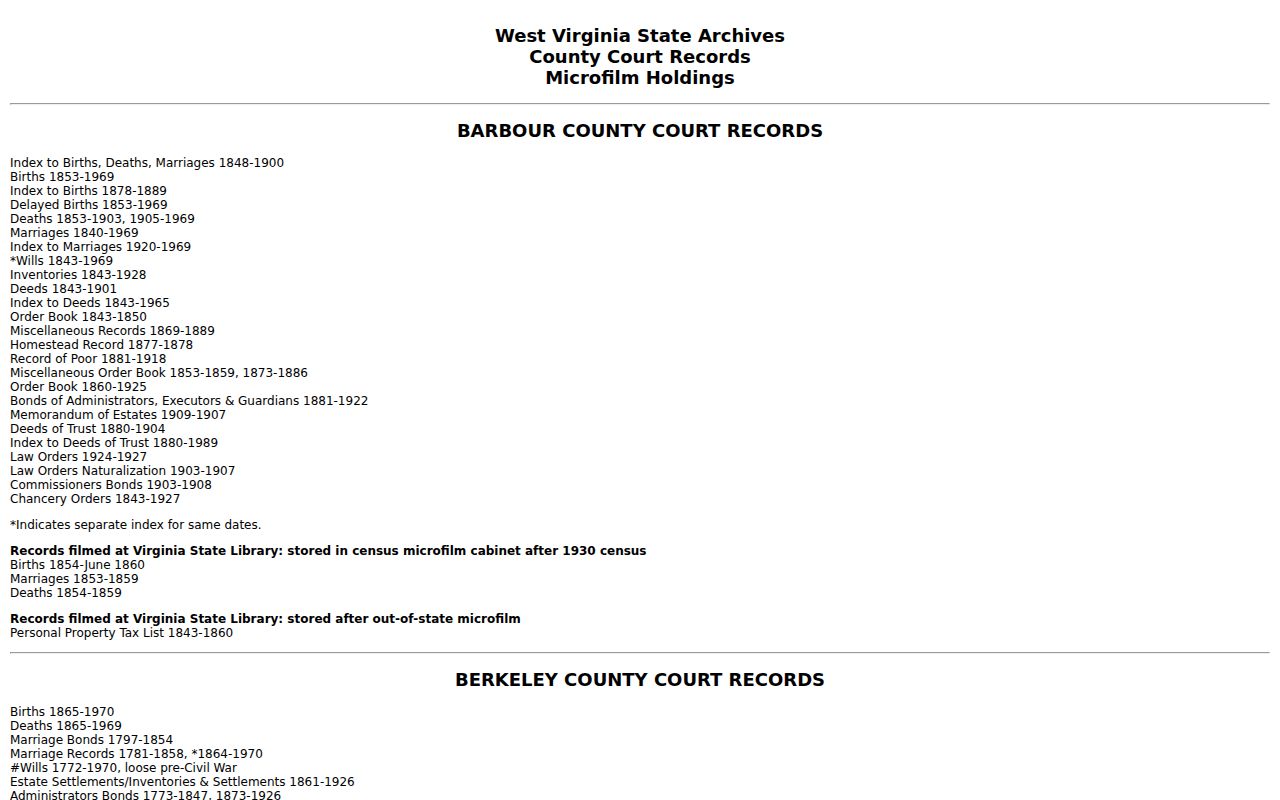
Check the finding aid first. Match a series and time span to your deed before requesting any specific archival reel or volume.
Walking a Boone County Chain Backward
The current deed starts the timeline. Each grantee points back to an earlier grantor. That grantor is your next grantee search. Record the legal description and date beside every name pair you add. When a town lot turns into a tract or addition name, compare the map and surveyor record before stepping further back.
- Find the latest recorded deed and write down its grantee, grantor, date, book/page, and legal description.
- Search the grantor as a grantee in the next earlier deed, matching the same tract.
- Repeat the name and description check for each transfer, noting entity, estate, or fiduciary wording.
- When the index reaches its verified coverage edge, ask the Clerk or Archives for the older book or reel.
- Grantor / grantee
- The transferor and receiving party named in a deed.
- Chain of title
- The linked sequence of recorded conveyances for a tract.
- Legal description
- The land wording used to match older and newer records.
- Reverse index
- A name route used to work backward from a grantee to prior grantors.
How Far Back Boone County Ownership Records Go
Boone deed records date to 1847 in the Archives finding aid. Deed books were filmed through 1910. The index runs through 1968. The County Clerk's IDX page does not state how far back its web records reach, so a missing online result is not proof a deed never existed. Ask the Clerk which system covers your year. Then lean on the Archives finding aid for older holdings. Boone County's courthouse reportedly burned in 1861. That is a custody question, not proof that every early land record perished. The surviving index and book runs show some series lived on in more than one form, so note whether each citation came from a county book, a Virginia-filmed copy, archive microfilm, or a later index entry.
Historical research. Use former-owner records for house history, estate work, or title diligence. Do not use a chain of names to track, harass, or harm a living person.
Following Name Changes in Boone County Deeds
Old deeds hide former owners under initials, middle names, spelling variants, and married names. Search the name exactly as the deed spells it. Then try a distinctive fragment if the index allows. The county's online IDX interface includes name and date controls. Older archive references run on their own finding aids. Names alone can build a false chain. Compare the legal description, district, map reference, acreage, and neighboring calls before trusting a match. A same-named person may have conveyed a different tract. When an instrument cites a prior deed, copy that book and page into your timeline and pull the cited document. A trust, estate, or company may appear as an owner. Keep the entity's wording intact. Look for the instrument behind its authority. For recent entries, the Boone County Clerk online-records page is the official starting point for the county's electronic records service.
An index entry is only a pointer. The deed itself is the evidence for its parties and its land description.
Madison Additions in the Former Owner Trail
In Madison, subdivision and addition names can link a present lot to older deeds. The county's Madison Map 8 identifies the C&A, Shields, and Crawford & Ashby Additions. Treat those labels as clues. Check them against the legal description and recorded plat. They are not substitutes for a street address or a modern tax map number.
Madison was called Boone Court House until 1906. A deed written before the rename may use the older place name. The land itself did not move. That history explains search results that look unfamiliar. Still, the date and legal description must match the same tract.
Use the addition wording to orient your search. Then confirm the transfer against the deed book and plat. The Madison property records page covers city parcels. It shows how they stay part of Boone County's assessment and deed systems.
Keeping a Former Owner Research Log
Build one log line for every instrument you touch. Write the parties exactly as spelled. Add the recording date, the book and page or instrument number, any consideration, and the full land description. Note every acreage change, altered lot wording, new district reference, or shift in parcel shape. Citations beside the names pay off later. A weak link can be revisited without repeating the whole Boone County property records search.
Keep a deeded transfer separate from an assessment update. The tax card names an owner of record for a tax year. An older book citation marks the actual conveyance. Probate orders, trusts, mortgages, and liens add context, but none of them passed title by itself. The deed records guide covers the Clerk index and document route in detail. This page is about linking one verified conveyance to the next.
A gap in the chain is a question, not a conclusion. Ask the Clerk or Archives which record series covers that date. Do not assume the land had no earlier owner. Flag any missing volume or illegible page as a limitation. A careful log is what lets a later title examiner tell a documented chain from a guess. A guess built on a similar name is not a chain.
Estate Transfers in Boone County Ownership History
An owner's death can send the name trail through an estate. It may involve an executor, an administrator, a trustee, or an heir. Boone County Clerk records include estate matters. But a probate file and a land conveyance answer different questions. The will or appointment shows who had authority to act. The recorded deed or order shows how the interest in the land actually moved.
Search the prior owner's name across the Clerk's estate and deed materials. Then compare the instrument's legal description against the tract being traced. An estate can administer many assets. An heir's name in a file does not prove which parcel passed to that person. Keep the appointment or order citation beside the deed citation so the sequence stays clear.
For a recent transfer, set the last deed's recording date against the annual assessment card. For older years, ask where the volume sits. It may be in the courthouse or among the Archives' listed series. The former-owner chain holds only when each step names the same land. A related person is not enough.
Matching Former Owners to Madison Lots
Older Madison deeds often skip street numbers entirely. Instead, they describe land by addition and lot. Madison Map 8 names the C&A, Shields, and Crawford & Ashby Additions. It carries a date of October 31, 1963. Its tax-map labels can help you work through an older neighborhood. Those labels establish no legal boundary, though. They never replace a recorded plat. Watch also for the historic town name Boone Court House. It can surface in documents written before Madison's 1906 renaming.
Lay the deed's lot and addition wording beside the current assessment PID. The parcel number is a finding key. But the deeded legal description is what proves continuity across older map systems. Rural tracts demand more care. Keep survey calls, district references, creek and road descriptions, and every acreage change. Do this as the chain of title moves forward.
Sometimes the trail from lot label to legal description simply breaks. When that happens, pause at that instrument. Track down the plat or the surveyor-book reference. That pause keeps a former-owner chain from leaping across an address change. It also guards against a parcel with a similar name.